AGIBOT Innovation (Shanghai) Technology Co., Ltd. AgiBot A2vsUnitree Robotics Unitree G1
Side-by-side comparison of AGIBOT Innovation (Shanghai) Technology Co., Ltd. AgiBot A2 and Unitree Robotics Unitree G1: specs, price, use cases and SDKs.

AgiBot A2
A versatile humanoid robot for service, logistics, and light industrial automation.
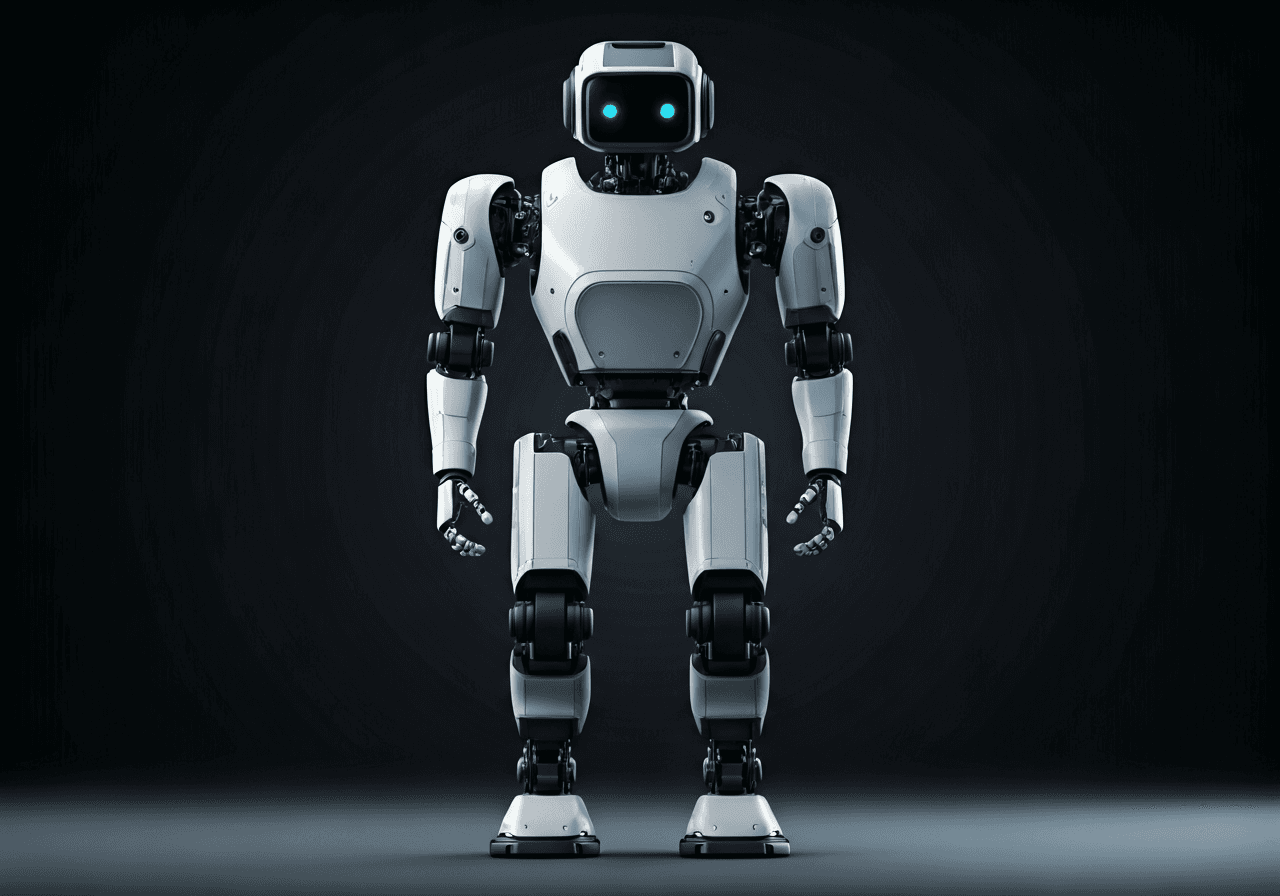
Unitree G1
Consumer-grade humanoid with 23 DoF
Specifications
| Spec | AgiBot A2 | Unitree G1 |
|---|---|---|
| Price (USD) | $100,000 | $16,000 |
| Category | humanoid | humanoid |
| Payload | 15 kg | — |
| Runtime | 2 h | 2 h |
| Speed | 1.2 m/s | 2 m/s |
| Weight | 69 kg | 35 kg |
| Degrees of Freedom | 40 | 23 |
| Battery | 700 Wh | 9000mAh |
- Customer service
- Reception
- Exhibition presentations
- Marketing
- Manufacturing assistance
- Logistics sorting
- Security patrols
- Data collection
- Research applications
- Autonomous manipulation and pick-and-place
- Industrial assembly and quality inspection
- Autonomous indoor navigation
- Material movement
- Workpiece loading
- Pallet transport
- Vibratory feeder loading
- Retail brand activation
- Research and education
- Entertainment and broadcast media
- Research
- Education
- Demos
- Home companion prototyping
When to pick which
Choose the AgiBot A2 for industrial environments and high-stakes commercial deployments where complex manipulation and physical strength are non-negotiable. With 40 degrees of freedom and a substantial 15kg payload capacity, the A2 is engineered for tasks like logistics sorting, industrial assembly, and autonomous material movement that require precision handling of heavy workpieces. Its sophisticated software ecosystem, including the AIDEA data pipeline and Genie Sim 3.0, supports large-scale enterprise integration and high-fidelity simulation. This makes it the superior choice for manufacturing facilities or logistics hubs needing a robust, production-ready humanoid capable of assisting human labor in structured, heavy-duty workflows.
Select the Unitree G1 for academic research, educational programs, or rapid prototyping where budget efficiency and agility are the primary constraints. At a fraction of the cost of industrial models, the G1 allows universities and R&D labs to deploy multiple units for swarm intelligence or human-robot interaction studies. Its lightweight 35kg frame and 2m/s walking speed make it safer and more portable for indoor laboratory testing compared to heavier industrial units. Support for ROS2 Humble and standard C++/Python SDKs ensures a low barrier to entry for developers focused on gait optimization, AI navigation, or home companion software development rather than heavy-duty physical labor.
Ready to evaluate?
Request a vendor quote or compare more options.