Amazon's Fauna Robotics deal makes Sprout the quiet home-humanoid acquisition to watch
Amazon's acquisition of Fauna Robotics is easy to underestimate because Sprout does not look like a warehouse machine. It is small, soft-bodied, expressive and intentionally approachable. That is exac
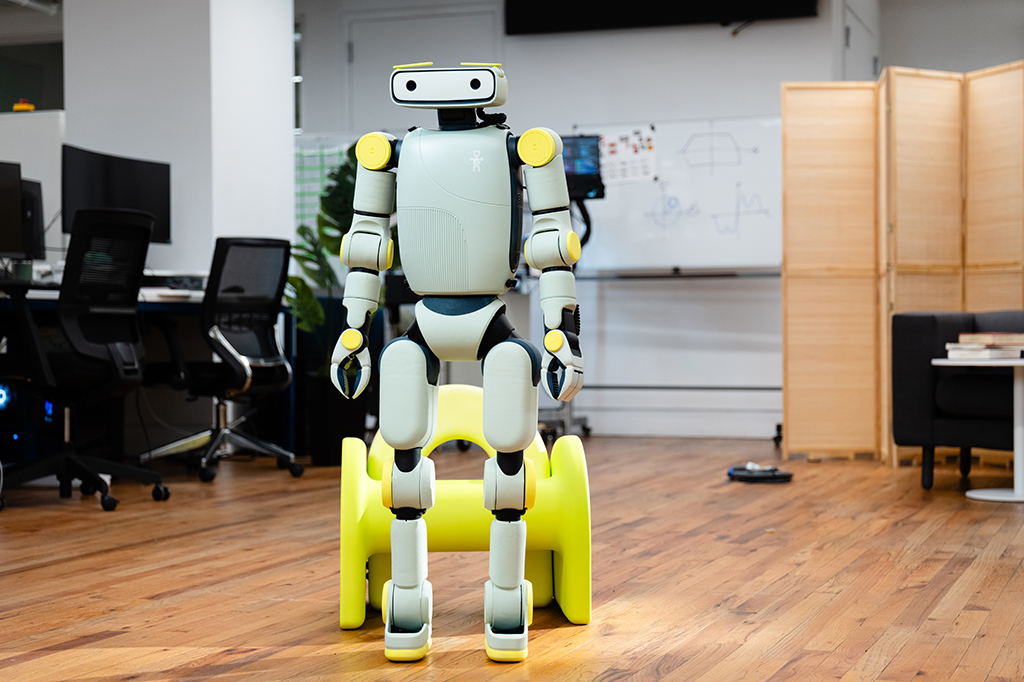
Amazon's acquisition of Fauna Robotics is easy to underestimate because Sprout does not look like a warehouse machine. It is small, soft-bodied, expressive and intentionally approachable. That is exactly why the deal matters.
Associated Press reported on March 24, 2026 that Amazon acquired Fauna Robotics less than two months after the New York startup introduced Sprout, a humanoid robot aimed at homes, schools and social spaces. Financial terms were not disclosed. Fauna said it would operate as Fauna Robotics, an Amazon company.
Sprout is not a heavy industrial humanoid. Fauna's own launch materials describe it as a Creator Edition developer platform: 107 cm tall, 22.7 kg, 29 degrees of freedom including active eyebrows, NVIDIA Jetson AGX Orin compute, ZED 2i stereo vision, four time-of-flight sensors, a microphone array, IMU and a swappable 3-3.5 hour battery.
That profile explains the strategic fit. Amazon already has more than a million robots in warehouse operations, but those machines mostly live behind the scenes. Sprout points toward a different question: how does a robot behave around people in homes, schools, entertainment venues, retail spaces and labs without feeling dangerous or alien?
Fauna's answer is not maximum strength. It is low mass, soft exterior materials, minimized pinch points, compliant control, expressive face hardware and an SDK that lets developers build behaviors without designing a humanoid from scratch. Early customer references around Disney, Boston Dynamics, UC San Diego and NYU suggest the first market is not general consumers, but builders and organizations testing human-facing robot experiences.
For Amazon, that could connect several threads: Alexa, consumer devices, home mapping, entertainment, retail, fulfillment robotics and embodied AI research. It also gives Amazon a second route into home robotics after the failed iRobot acquisition attempt, this time through a developer humanoid platform rather than a mature robot-vacuum business.
The buyer caveat is important. Sprout is not positioned as a robot that will clean your whole house today. It cannot lift heavy objects, and many demos involve teleoperation, scripted behaviors or developer-controlled scenarios. The useful procurement question is whether Sprout gives labs and product teams a safer, more accessible platform for testing social robotics, not whether it replaces a human assistant.
RoboHub now lists Sprout Creator Edition as a research and developer humanoid, not a mass-market household appliance. Teams evaluating it should ask about current availability after the Amazon deal, SDK access, support model, data handling, warranty, replacement parts, and whether new customers can still request units or must go through Amazon's internal process.
The larger signal is that consumer robotics is splitting into two tracks. One track chases useful household labor through machines like UniX AI Panther and 1X NEO. The other chases safe, expressive, developer-friendly robots that can live near people and become a platform. Sprout sits firmly in the second track, and Amazon now owns that option.
Need this kind of robot for your operation?
Send us the use case. We return a vendor-neutral shortlist, indicative pricing, and warm vendor contacts within 48 hours.