Kinetix AI KAI pushes humanoid hardware toward tactile skin and extreme degrees of freedom
Kinetix AI has moved into the crowded humanoid race with KAI, a full-size humanoid robot whose headline claims are unusually aggressive: 115 degrees of freedom, 36 degrees of freedom per hand, and a f
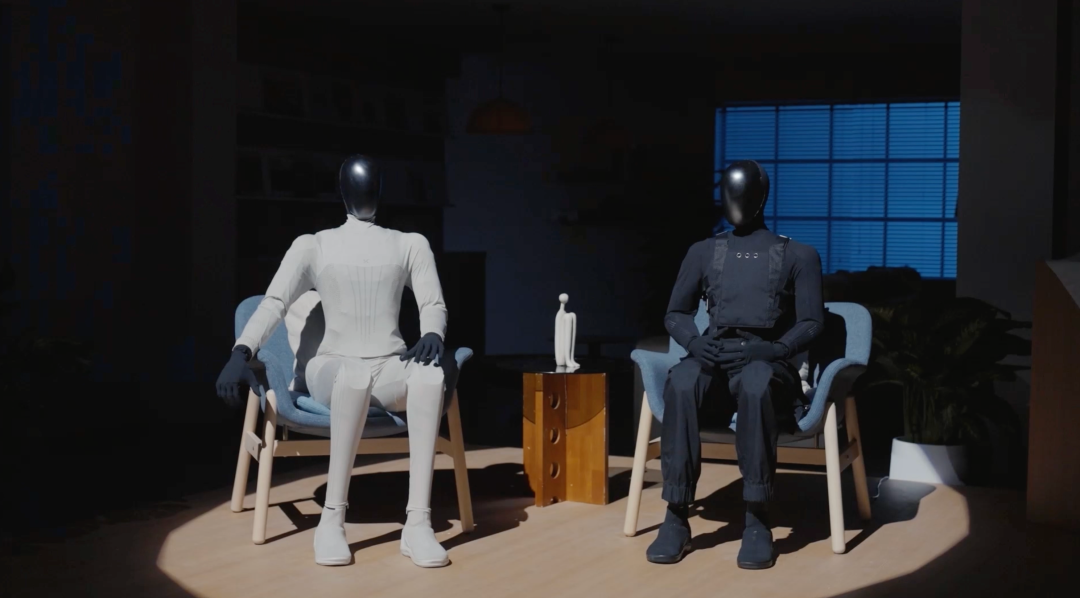
Kinetix AI has moved into the crowded humanoid race with KAI, a full-size humanoid robot whose headline claims are unusually aggressive: 115 degrees of freedom, 36 degrees of freedom per hand, and a full-body tactile skin system with 18,000 sensing points.
The robot was introduced at Kinetix AI's GIFTED launch event in late April. Gasgoo reported that KAI is a full-size humanoid from Kinetix AI, an angel-round portfolio company of Bluebird Intelligent Control, and that the launch was presented through a robot dialogue format rather than a conventional executive product reveal.
The strongest part of the story is not the stage format. It is the hardware direction. Most current humanoids trade dexterity for reliability: fewer joints, simpler hands, and limited tactile sensing make the robot easier to ship, but less human-like in close-contact work. KAI goes in the opposite direction by emphasizing articulation and touch.
Gasgoo reported 115 total degrees of freedom across the body. Embodied Global and RobotsBeat separately reported 36 degrees of freedom per hand, described as a mix of active and compliant motion, plus a tactile skin layer with 18,000 sensing points capable of detecting light contact. Those numbers, if they hold in production hardware, put KAI closer to a service and home-assistance concept than a warehouse-only box mover.
That distinction matters. A humanoid in a warehouse can often survive with strong arms, a basic gripper, and a reliable walking or wheeled base. A humanoid in a home, hotel, clinic, showroom, or elder-care setting has to touch objects and people-adjacent surfaces safely. It needs to know when it is brushing a person, slipping on a cup, pushing too hard on a drawer, or catching soft material in a hand.
Kinetix AI's own site frames the company around robots that "feel and think like humans" and describes a Physical World Model for whole-body control. Its KaiBot page also points toward home, factory, restaurant, hotel, and shop scenarios. That is a broader promise than most humanoid startups can currently prove, but it gives a clear view of the target market: general physical assistance, not just industrial pick-and-place.
The risk is obvious. High degrees of freedom and tactile skins can create engineering burden as quickly as they create capability. Every extra joint means more calibration, control complexity, mechanical wear, and failure modes. Every sensor layer adds durability, wiring, signal-processing, and repair questions. A humanoid can look more human on a spec sheet while becoming harder to manufacture and maintain.
That is why KAI should be watched as a hardware signal rather than treated as a proven commercial robot. The specs show where the Chinese humanoid ecosystem is pushing: higher dexterity, richer tactile feedback, more human-like motion, and lower expected prices. But buyers still need answers on production timeline, actual price, developer access, service regions, safety certification, uptime, and whether the tactile skin survives daily work.
For RoboHub buyers, KAI belongs on the same watchlist as Unitree G1/H1, AGIBOT, Fourier GR-1, ROBOTIS K0, Xynova Flex 2, and Linkerbot's dexterous-hand ecosystem. The market is splitting into two camps: robots optimized for deployment now, and robots optimized for human-like capability later. KAI is clearly trying to represent the second camp.
The commercial takeaway is simple: tactile sensing is becoming a central battleground. Walking demos still get attention, but useful humanoids will be judged by whether they can touch the world safely and repeatedly. If Kinetix AI can turn KAI's 115-DoF and tactile-skin concept into reliable shipped hardware, it will be a serious entrant. Until then, it is a high-spec signal worth tracking, not yet a procurement decision.
Sources checked by RoboHub include Kinetix AI's official site and KaiBot page, Gasgoo's April 29 coverage of KAI, Embodied Global's technical summary, and RobotsBeat's coverage of the reported 115-DoF humanoid specifications.
Need this kind of robot for your operation?
Send us the use case. We return a vendor-neutral shortlist, indicative pricing, and warm vendor contacts within 48 hours.