Schaeffler's 1,000-AEON plan turns humanoid actuators into a factory procurement story
Schaeffler and Hexagon Robotics have turned AEON from another industrial humanoid announcement into a harder procurement signal: Schaeffler says it plans to deploy at least 1,000 Hexagon Robotics huma
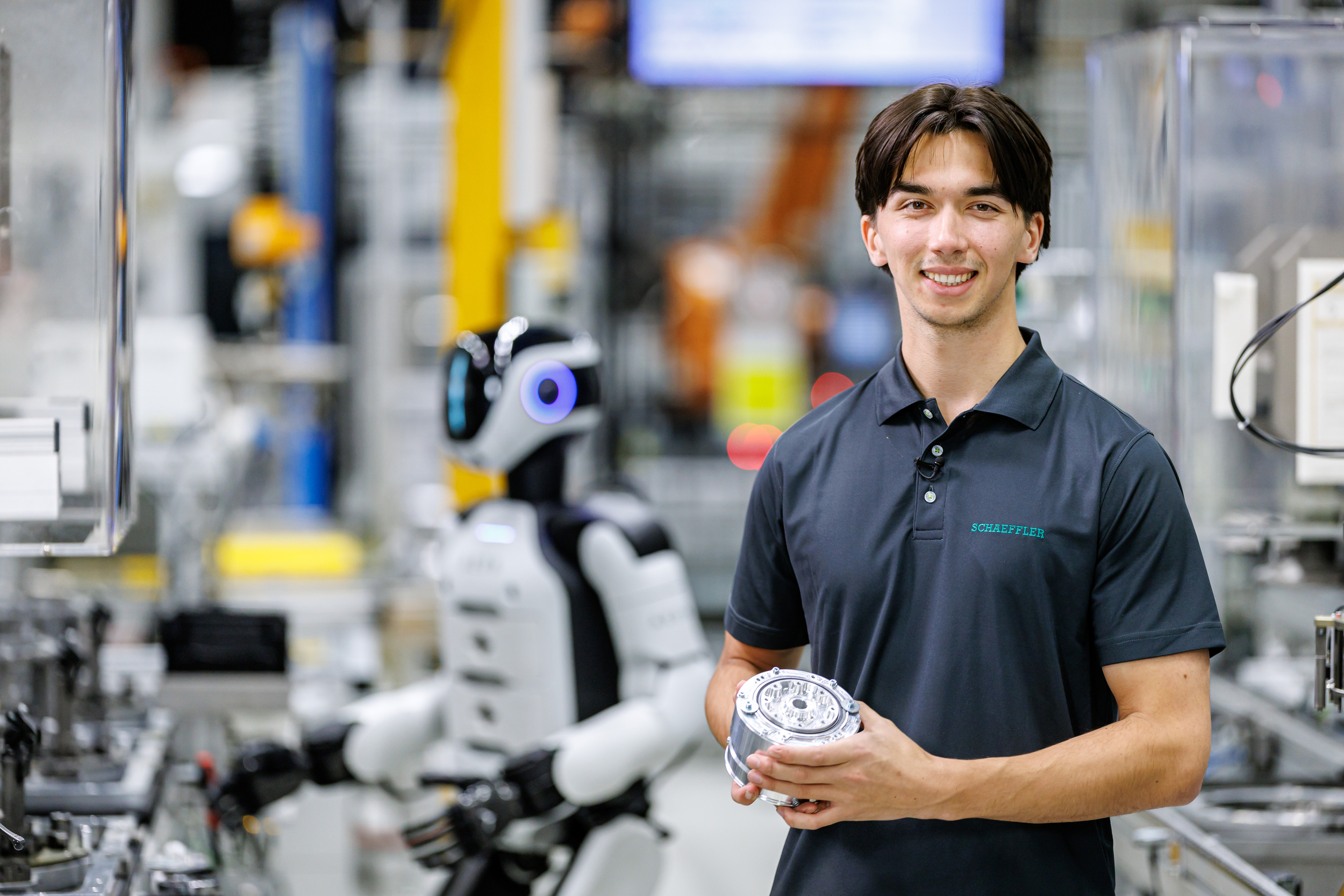
Schaeffler and Hexagon Robotics have turned AEON from another industrial humanoid announcement into a harder procurement signal: Schaeffler says it plans to deploy at least 1,000 Hexagon Robotics humanoids across its global production system within seven years.
The April 22 partnership is not just a robot pilot. Schaeffler and Hexagon describe a strategic technology partnership around humanoid robotics, including the development and supply of high-precision rotary actuators for humanoid joints such as shoulders and elbows. Schaeffler says the actuator platform uses electric motors with integrated power electronics, precise encoders, and either planetary or strain-wave gearing depending on the joint requirement.
That matters because humanoid robots are becoming a supply-chain problem as much as an AI problem. Buyers can watch impressive task videos, but fleets will scale only if the expensive, high-load joints are reliable, serviceable and available in volume. Actuators, bearings, drives, motors, sensors, thermal management and battery systems are the practical foundation under every warehouse or factory humanoid roadmap.
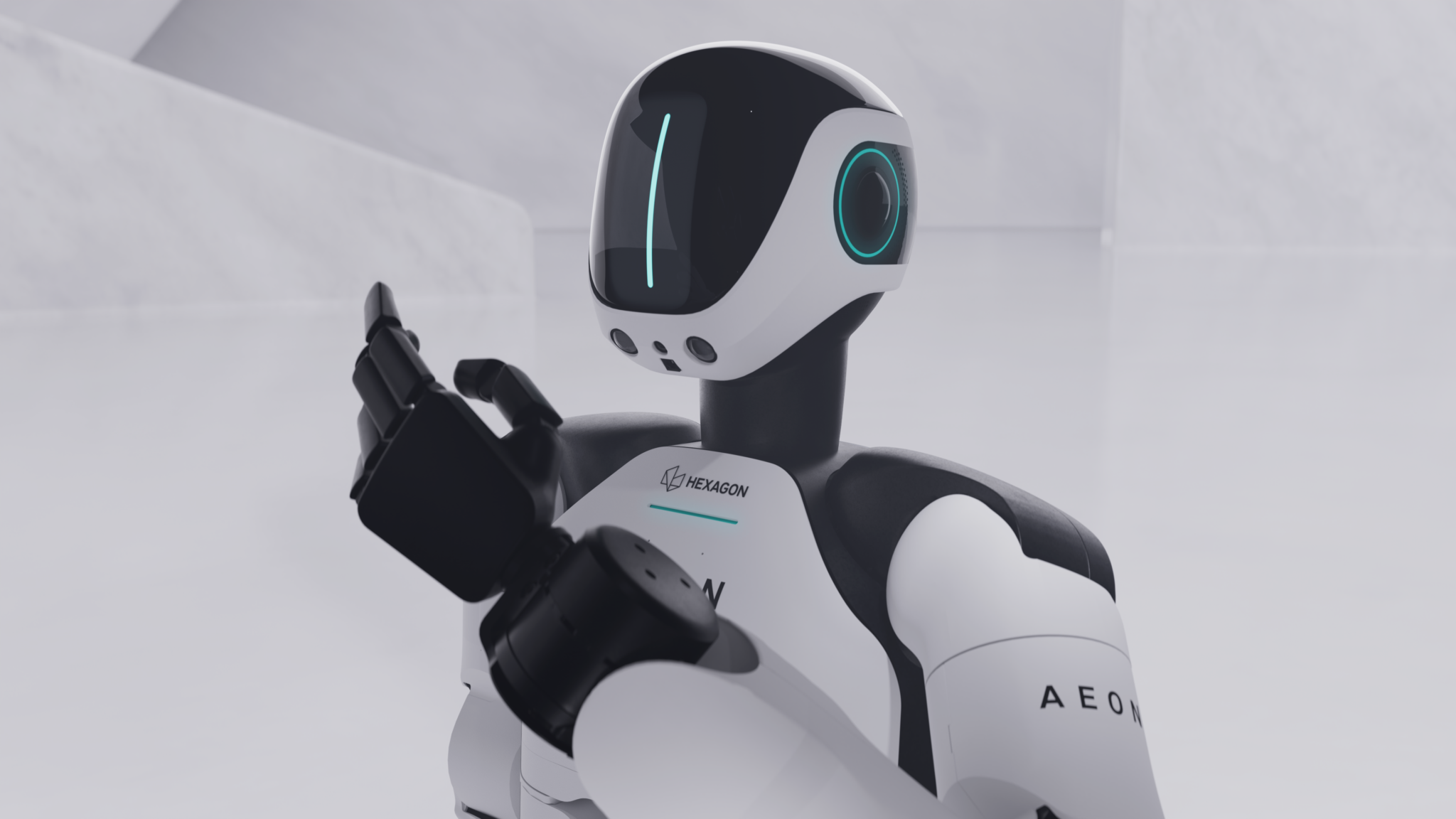
Hexagon Robotics brings the AEON humanoid. The official AEON product page positions it for industrial work with precision measurement, multimodal sensor fusion, 3D spatial intelligence, high-performing actuators and AI-based motion control. Hexagon lists manipulation, part inspection, reality capture and operator support as target work areas.
AEON's published product specs make it easier to compare against other industrial humanoids. Hexagon lists a 165 cm body, 60 kg weight, 2.4 m/s top speed, 34 degrees of freedom, auto-swappable batteries for continuous work with up to four hours per charge, and payload of 15 kg short term or 8 kg for constant carry.
For Schaeffler, the more important piece is internal deployment. A 1,000-robot target across its own global production network would give the company a proving ground for both the robots and the joint hardware it wants to supply into the broader humanoid ecosystem. If the deployments work, Schaeffler gets factory automation gains and evidence for actuator customers. If they struggle, the failure modes will show up inside real plants rather than in a trade-show demo.
For RoboHub buyers, this is a useful category marker. AEON should be evaluated alongside Figure, Apptronik Apollo, Boston Dynamics Atlas, Agility Digit and other industrial humanoids, but its pitch is different: Hexagon leans on spatial intelligence and measurement heritage, while Schaeffler anchors the partnership in precision actuation and production-scale deployment.
The caveat is timing. The seven-year deployment target is forward-looking, and Schaeffler's own release includes standard cautions around projections. Procurement teams should ask which Schaeffler sites will receive AEON first, what task classes are in scope, how much work is autonomous versus supervised, what the service model looks like, and whether Schaeffler's actuator supply agreement changes delivery timelines or spare-parts economics for external customers.
Need this kind of robot for your operation?
Send us the use case. We return a vendor-neutral shortlist, indicative pricing, and warm vendor contacts within 48 hours.