Engineered Arts AmecavsFourier Intelligence GR-1
Side-by-side comparison of Engineered Arts Ameca and Fourier Intelligence GR-1: specs, price, use cases and SDKs.
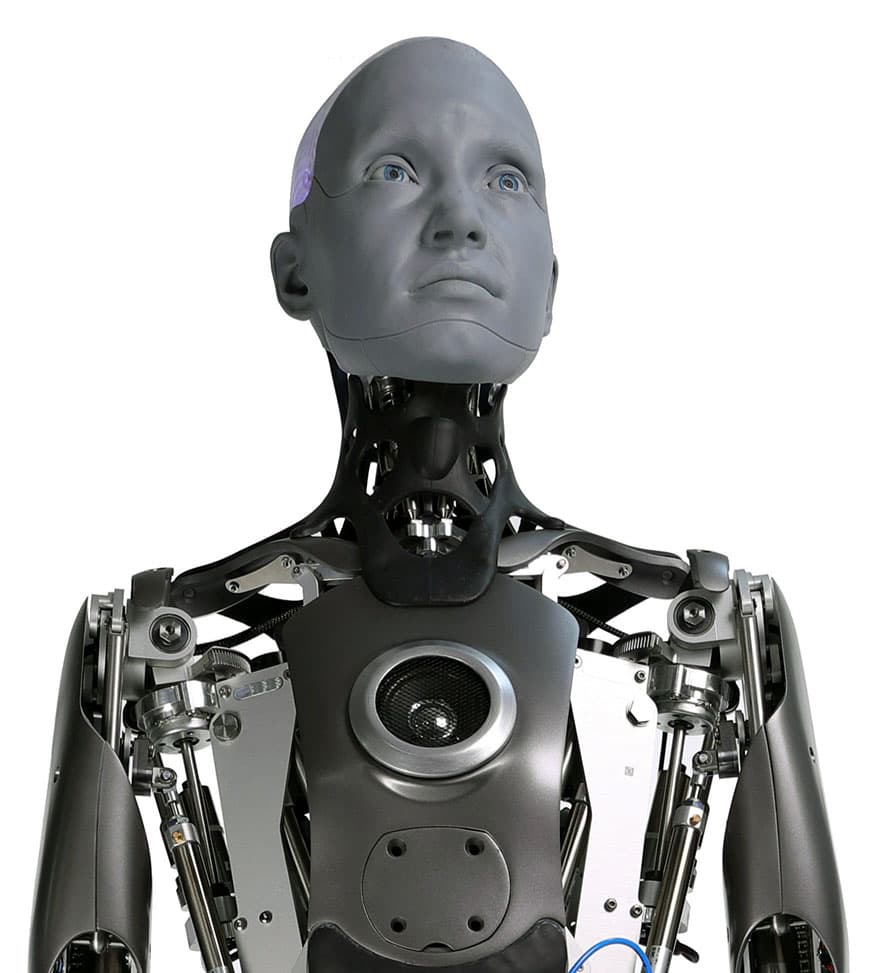
Ameca
Hyper-realistic humanoid face + upper-body for HRI research

GR-1
Open-platform humanoid for research + light industrial pilots
Specifications
| Spec | Ameca | GR-1 |
|---|---|---|
| Price (USD) | $175,000 | $150,000 |
| Category | humanoid | humanoid |
| Payload | — | 50 kg |
| Runtime | — | 2 h |
| Speed | — | 1.4 m/s |
| Weight | 50 kg | 55 kg |
| Reach | Upper-body humanoid | — |
| Degrees of Freedom | 51 | 40 |
| Battery | — | Li-ion swap |
- HRI research
- Museum / theme park installations
- Brand activations
- Film + TV
- University research
- Light manufacturing pilots
- Rehabilitation R&D
- Robotic hand teleoperation studies
When to pick which
Choose the Engineered Arts Ameca for high-visibility public deployments where lifelike social engagement is the primary objective. In industries like entertainment, theme parks, or corporate brand activations, Ameca’s 51 degrees of freedom—specifically concentrated in the face and upper body—allow for nuanced non-verbal communication that the GR-1 cannot replicate. For researchers focusing on social robotics or LLM-driven conversational AI, the native Tritium OS and pre-built plugins for OpenAI and Google provide a turnkey solution for naturalistic HRI. Its hyper-realistic aesthetic makes it the superior choice for film production or interactive exhibits where human-like presence is a non-negotiable requirement.
Opt for the Fourier Intelligence GR-1 when the project requires full-body mobility and physical task execution rather than social expression. At a $150,000 price point, it is more cost-effective for university labs or industrial R&D centers testing light manufacturing pilots or rehabilitation protocols. The GR-1’s 50kg payload capacity and 1.4 m/s walking speed make it suitable for logistics research or teleoperation studies involving heavy-duty robotic hands. Developers requiring deep system access will benefit from the ROS2 drivers and Python SDK, allowing for custom gait control and sensor integration that the more closed, expression-focused Ameca platform does not prioritize.
Ready to evaluate?
Request a vendor quote or compare more options.